Panellists highlight growing urgency for integrated climate–nature strategies

Panellists highlight how integrating climate and nature is no longer optional but a systemic shift that will reshape how businesses operate.



There is a growing recognition that businesses, financiers and policymakers must move beyond siloed approaches when it comes to sustainability, embedding both climate and biodiversity considerations into core decision-making and operations. This was the finding highlighted by panellists in a climate and nature integration webinar hosted by Creamer Media Webinars on behalf of environmental conference organiser Sustainability & ESG Africa Conference (SEACon).
Moderated by SEACon director and co-founder Wendy Poulton, the discussion brought together perspectives from environmental practitioners, finance, conservation and global policy, all converging on the need for what panellists described as “true integration”.
Provincial government agency Ezemvelo KZN Wildlife principal conservation planner Dominic Wieners, who is also the conference chair for the International Association for Impact Assessment South Africa, stressed that integration must translate into real-world outcomes.
“True integration is where we see climate decisions influence decisions that have real-world implications on the ground,” he said, noting that environmental assessments often fail to meaningfully alter project outcomes.
From a global perspective, conservation membership union International Union for Conservation of Nature (IUCN) senior programme coordinator for climate change Rachel Asante-Owusu emphasised that integration must extend beyond environmental metrics to include social considerations. She highlighted the importance of understanding “dependencies around biodiversity and also what their impacts are around local communities,” adding that inclusive decision-making is critical to achieving positive outcomes.
Financial institutions are also increasingly driving this agenda. Financial services provider Nedbank senior manager for sustainability Sashen Singh argued that integration is no longer a compliance exercise but a strategic imperative.
“We’re focusing on value creation, resilience and growth… it becomes a business decision and not just an environmental decision,” he explained, noting that proactive companies are already seeing competitive advantages.
Global conservation organisation World Wide Fund for Nature (WWF) senior technical specialist for climate action James Reeler reinforced the scientific basis for integration, pointing out that natural systems play a critical role in climate mitigation.
“Natural systems remove 50% of our emissions every year… [they are] a critical element of how we both mitigate and adapt,” he said, warning that businesses must consider broader environmental systems in their operations.
Balancing Competing Priorities
Despite broad agreement on the need for integration, panellists highlighted tensions between climate and nature objectives, particularly in land use.
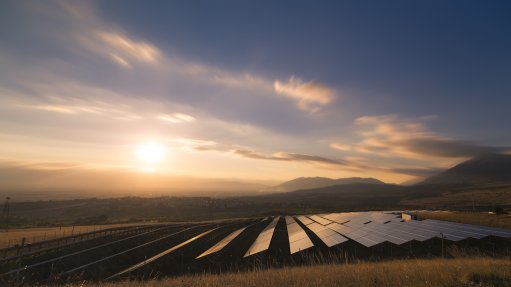
Reeler noted that the rapid rollout of renewable energy infrastructure can create conflicts. “Navigating that tension is going to be critical,” he said, cautioning against over-reliance on offsetting, which could undermine meaningful emissions reductions.
Asante-Owusu added that speed is a major challenge. “We need lots of renewables… but we need them fast,” she said, warning that the urgency of the energy transition can lead to “a temptation to skip steps”, potentially exacerbating environmental and social impacts.
Wieners echoed this concern, pointing to the inherent competition between land for conservation and land for development.
“Nature does often compete with the climate stuff,” he said, highlighting the need to balance urgency with long-term ecological considerations.
Meanwhile, panellists agreed that partnerships and improved tools are essential to unlock co-benefits and support integration.
Asante-Owusu pointed to frameworks such as the IUCN Nature-based Solutions Standard, as well as geospatial platforms that help companies identify existing conservation initiatives. “Look who else is working within your landscape rather than unnecessarily starting another project,” she advised.
Singh highlighted the role of partnerships with organisations such as the WWF in improving decision-making through science-based insights. “The facts tell you a story where you can’t actually dispute it,” he said.
However, Wieners cautioned that data limitations remain a significant barrier. “We’re applying national-scale data to a farm-level application,” he noted, arguing that coarse datasets can distort decision-making and reduce the effectiveness of environmental interventions.
Reeler agreed, adding that while global tools are useful, “there is essentially no replacing local knowledge and expertise”.
Skills and Future Readiness
The transition to integrated climate–nature strategies is also creating demand for new skills.
Asante-Owusu pointed to emerging needs in grid infrastructure, data mapping and technologies such as environmental DNA and AI. “There are a multitude of new techniques that can help indicate what you should be looking at,” she said.
From a financial perspective, Singh emphasised the need to bridge technical sustainability knowledge with commercial realities.
“How do we make that practical from a real-world business case?” he asked, adding that new industries such as electric vehicles and green hydrogen will drive reskilling opportunities.
Lifecycle Thinking and Policy Alignment
A recurring theme was the need to integrate climate and nature considerations across the full lifecycle of projects, from pre-feasibility to decommissioning.
Wieners argued that greater emphasis should be placed on project desirability at the earliest stages. “Is it desirable in that location? Are there better locations?” he asked, warning that current processes often prioritise convenience over optimal outcomes.
Asante-Owusu stressed that integration must begin even earlier. “Avoidance is the first step… and also the cheapest step,” she said, calling for more strategic, landscape-level planning.
Reeler added that South Africa has strong foundations in conservation planning but needs better integration with development strategies and circular economy thinking, particularly around end-of-life considerations for infrastructure.
Looking ahead, panellists highlighted growing pressure from regulatory frameworks and financial markets to adopt integrated approaches.
Singh noted that standards such as the Task Force on Climate-related Financial Disclosures, Taskforce on Nature-related Financial Disclosures and emerging International Financial Reporting Standards requirements will increasingly shape corporate behaviour.
“It’s something that is definitely going to become mandatory,” he said, adding that sustainability investments signal long-term resilience to financiers.
Asante-Owusu pointed out that global supply chains will amplify these pressures. “Everybody’s going to be involved in this [but] you may be involved at different parts of the reporting chain,” she said.
The panel also noted that while large corporates dominate the discussion, smaller enterprises also have a role to play.
Singh encouraged small and medium enterprises to start with practical measures. “Just start with really simple solutions,” he said, citing energy efficiency and water management as entry points for embedding sustainability.
The panellists concluded that integrating climate and nature is no longer optional but a systemic shift that will reshape how businesses operate.
As Poulton observed, the discussion reflected a broader trend towards convergence in sustainability frameworks and practices. With increasing regulatory, financial and societal pressure, organisations that proactively embrace integration are likely to be better positioned for long-term resilience and growth.
Article Enquiry
Email Article
Save Article
Feedback
To advertise email advertising@creamermedia.co.za or click here
Research Reports
Projects


Latest News


Showroom
Tsurumi Pumps Africa is a specialist supplier of Japanese-engineered submersible pumping solutions, serving customers across the African continent.
VISIT SHOWROOM
Astore Keymak is one of South Africa’s leading suppliers of high-quality Thermoplastic Pipeline Systems, with branches in the major provinces.
VISIT SHOWROOM

Press Office
Announcements
What's On
Subscribe to improve your user experience...
Option 1 (equivalent of R125 a month):
Receive a weekly copy of Creamer Media's Engineering News & Mining Weekly magazine
(print copy for those in South Africa and e-magazine for those outside of South Africa)
Receive daily email newsletters
Access to full search results
Access archive of magazine back copies
Access to Projects in Progress
Access to ONE Research Report of your choice in PDF format
Option 2 (equivalent of R375 a month):
All benefits from Option 1
PLUS
Access to Creamer Media's Research Channel Africa for ALL Research Reports, in PDF format, on various industrial and mining sectors
including Electricity; Water; Energy Transition; Hydrogen; Roads, Rail and Ports; Coal; Gold; Platinum; Battery Metals; etc.
Already a subscriber?
Forgotten your password?
Receive weekly copy of Creamer Media's Engineering News & Mining Weekly magazine (print copy for those in South Africa and e-magazine for those outside of South Africa)
➕
Recieve daily email newsletters
➕
Access to full search results
➕
Access archive of magazine back copies
➕
Access to Projects in Progress
➕
Access to ONE Research Report of your choice in PDF format
RESEARCH CHANNEL AFRICA
R4500 (equivalent of R375 a month)
SUBSCRIBEAll benefits from Option 1
➕
Access to Creamer Media's Research Channel Africa for ALL Research Reports on various industrial and mining sectors, in PDF format, including on:
Electricity
➕
Water
➕
Energy Transition
➕
Hydrogen
➕
Roads, Rail and Ports
➕
Coal
➕
Gold
➕
Platinum
➕
Battery Metals
➕
etc.
Receive all benefits from Option 1 or Option 2 delivered to numerous people at your company
➕
Multiple User names and Passwords for simultaneous log-ins
➕
Intranet integration access to all in your organisation